


2026
Why Lane Closure Technicians Are The Unsung Heroes of Roadway Safety
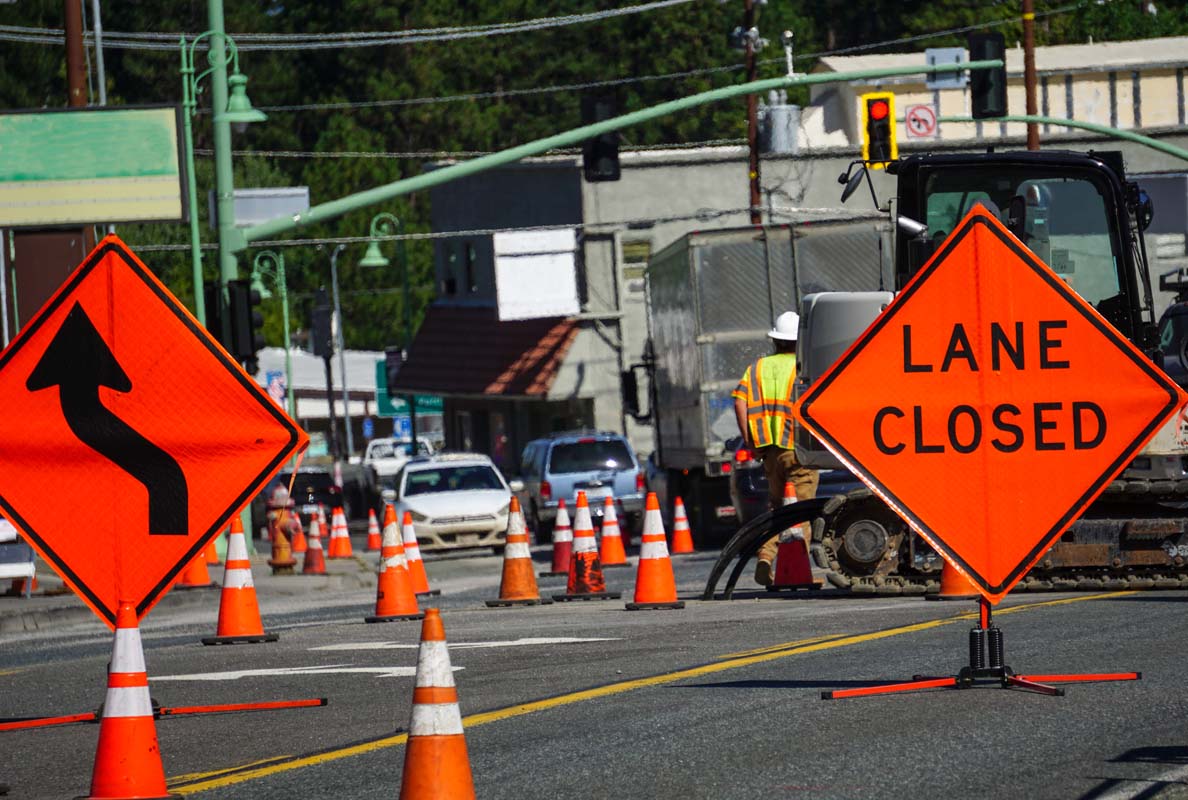
You are driving down a familiar stretch of highway. Your mind is on your grocery list, your upcoming meeting, or the podcast playing through your speakers.
Suddenly, the rhythm of the road changes. Bright orange pylons appear, a flashing arrow board directs you to merge, and a person in a high-visibility vest stands firmly at the edge of the transition.
Most drivers see this as a minor inconvenience. They see a thirty second delay in their commute. What they don’t see is the meticulous choreography, the high stakes risk management, and the unwavering focus required to keep both the public and the roadside workers alive.
The Invisible Shield Between Chaos and Order
Imagine trying to organize a massive group of people who are all moving at 100 kilometers per hour, encased in two-ton metal boxes, and largely distracted. That is the daily reality for a Lane Closure Technician. Their primary job is to create a "work zone" that functions as a predictable, safe environment amidst the unpredictability of public transit.
Safety on the road is not an accident. It is a calculated result of strategic placement and constant vigilance. An LCT doesn't just throw some cones on the ground and hope for the best. They follow strict provincial and municipal guidelines to ensure that every driver has enough time to react, slow down, and move over.
Without these technicians, road construction would be a free-for-all. Every pothole repair, bridge inspection, or utility upgrade would become a potential site for a multi-car pileup. They provide the buffer that allows the rest of our infrastructure to be maintained.
LCTs are Masters of the High Stakes Geometry of the Road
There is a surprising amount of science behind those orange cones. When an LCT sets up a site, they are essentially performing real-time engineering. They have to account for several variables that the average driver never considers:
- Taper Lengths: This is the distance over which traffic is moved from one lane to another. It must be long enough to prevent sudden braking but short enough to keep the work zone compact.
- Sight Lines: Technicians must ensure that signs are visible from a distance that matches the speed limit of the road.
- Buffer Spaces: These are the "empty" zones between the technician and the actual work crew. They act as a "crumple zone" in case a vehicle enters the work area accidentally.
- Environmental Factors: Rain, fog, or blinding sun can change how a lane closure needs to be staged to remain effective.
Every time an LCT steps onto the road, they are making these calculations. They are ensuring that the transition for the driver is as smooth as possible, reducing the "shock" to the traffic flow that often causes rear-end collisions.
Adding a Human Element to Our Growing Digital World
We live in an age of GPS and autonomous driving aids, but nothing replaces the human eye of a Lane Closure Technician. While an app might tell you there is a delay, it cannot navigate a confused driver who has missed a turn or manage an emergency vehicle that needs to bypass a blockade.
LCTs are expert communicators. They use hand signals, radios, and "Slow/Stop" paddles to speak a universal language to drivers. They have to read the body language of a car. Is that driver looking at their phone? Are they slowing down too quickly? Is the truck behind them failing to notice the merge?
This constant "reading" of the road is exhausting. It requires a level of situational awareness that few other jobs demand. They aren't just watching the traffic; they are anticipating the mistakes drivers haven't even made yet.
Adding Equipment That Saves Lives
A hero is only as good as their tools, and the arsenal of a Lane Closure Technician is designed for maximum visibility and impact. These aren't just random items; they are standardized safety devices that speak to the subconscious of every driver on the road.
- Traffic Cones and Delineators: These provide the physical boundary. Their reflective coating ensures they are visible even in the dead of night.
- Arrow Boards: These high-intensity LED displays provide clear, unmistakable direction to motorists from hundreds of meters away.
- Signage: "Road Work Ahead," "Right Lane Closed," and "Transition" signs are the first point of contact between the LCT and the driver.
- TMA Trucks (Truck Mounted Attenuators): Often referred to as "Crash Trucks," these vehicles are equipped with a large energy-absorbing device at the rear. They are positioned to take the hit if a motorist veers into the work zone, protecting the workers ahead.
Why Specialized Traffic Control is a Non-Negotiable Asset
For construction companies and municipalities, hiring professional Lane Closure Technicians is not just about checking a box for compliance. It is about risk mitigation and efficiency.
When a lane closure is handled by experts:
- Liability is Reduced: Professional setups follow legal standards, protecting companies from the massive legal fallout of a worksite accident.
- Work Moves Faster: When the crew feels safe, they work faster and with more focus. They aren't constantly looking over their shoulders for an errant vehicle.
- Traffic Moves Smarter: Expertly designed closures minimize "rubbernecking" and bottlenecking, keeping the public as happy as possible under the circumstances.
- Lives Are Saved: This is the most important metric. A professional LCT setup prevents the tragedies that make the evening news.
Moving Forward With Respect for LCTs and the Road
The next time you see the glow of an arrow board in the distance, take a moment to adjust your perspective. You aren't just looking at a construction site. You are approaching a highly organized safety operation led by a professional who has your back.
Slow down. Put the phone away. Give them the space they need to do their job. They are out there in the heat, the cold, and the wind, making sure that the only thing you have to worry about is what’s for dinner.
Stop N Go Traffic Control is a traffic management company based out of Surrey, BC. We provide traffic management solutions to the industrial, construction, public and private sectors throughout the Lower Mainland.