


2026
What does a 'Lane Closure Technician' do?
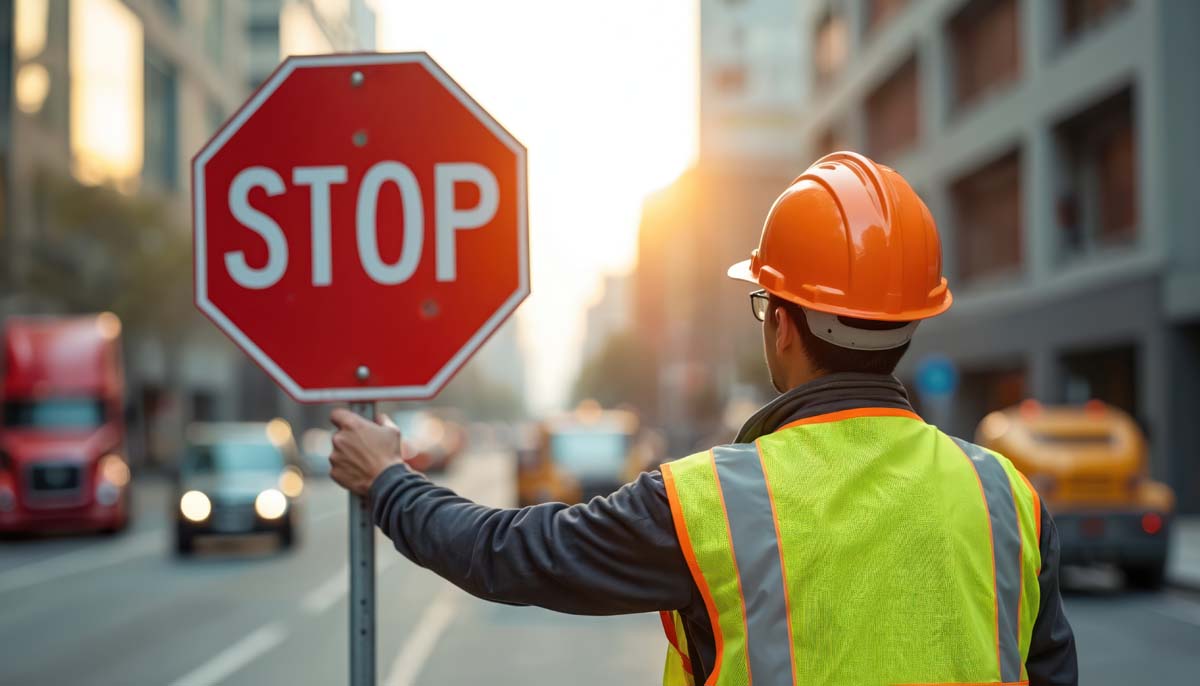
If you have ever driven through a construction zone in British Columbia, you have seen them. They are the professionals wearing high visibility gear, surrounded by orange cones, and managing the flow of thousands of vehicles. While many people refer to them simply as flaggers, there is a much more technical and highly skilled role behind the scenes known as a Lane Closure Technician or LCT.
A Lane Closure Technician is the architect of a safe work zone. They are responsible for more than just holding a sign. They are the individuals who design, implement, and maintain the complex systems of barriers and signs that protect road workers and the driving public. Without their expertise, road construction would be chaotic and incredibly dangerous for everyone involved.
The Core Responsibilities Of A Lane Closure Technician
The primary goal of an LCT is to create a predictable environment where traffic can move smoothly despite obstacles. This requires a deep understanding of traffic patterns, driver behavior, and provincial safety regulations. An LCT does not just show up and start moving cones. Every action they take is part of a calculated plan designed to prevent accidents.
They serve as the first line of defense for a construction crew. While the crew focuses on repairing a bridge or paving a highway, the LCT is focused entirely on the world outside the work zone. They monitor the speed of approaching vehicles and adjust the layout of the lane closure to ensure that drivers have enough time to react to the changing road conditions.
Setting Up Traffic Control Systems
One of the most physically demanding and technical aspects of the job is the setup. An LCT must translate a printed Traffic Control Plan (TCP) into a real world scenario.
This involves placing hundreds of traffic cones, barrels, and signs at precise intervals. These intervals are not random; they are calculated based on the speed limit of the road and the specific geography of the area. Other tasks they perform include:
- They deploy advanced warning signs several hundred meters before the actual work zone.
- They set up tapers, which are the diagonal lines of cones that guide cars into the open lane.
- They ensure that all equipment is visible from a distance, even in poor weather or at night.
- They use specialized trucks equipped with arrow boards and flashing lights to provide extra protection.
Maintaining The Integrity Of The Work Zone
The job does not end once the cones are on the ground. A Lane Closure Technician must constantly patrol the work zone. In a busy city like Vancouver or on a high speed highway in the Fraser Valley, traffic equipment can be shifted by the wind, heavy rain, or even the wake of a passing semi truck.
An LCT is responsible for realigning any displaced cones and ensuring that signs remain upright and legible. They also keep an eye out for confused drivers who may be attempting to enter the work zone illegally. By maintaining the integrity of the layout, they ensure that the safety barrier between the workers and the traffic remains unbroken.
The Technical Expertise Required For The Role
Becoming a Lane Closure Technician is about more than just having a driver's license. It requires specialized training and certification. In British Columbia, this often involves completing courses recognized by the BC Construction Safety Alliance (BCCSA). These courses teach the science behind traffic control, including how to read engineering drawings and how to calculate buffer spaces.
Knowledge of The BC Ministry Of Transportation Manual
Every LCT must be an expert in the Traffic Management Manual for Work on Roadways. This is the gold standard for road safety in our province. It dictates everything from the color and size of the signs to the exact distance between cones on a 100 kilometer per hour highway.
Understanding this manual allows an LCT to make split second decisions when the situation on the ground changes. If an accident occurs nearby or if traffic begins to back up excessively, the LCT knows exactly how to adjust the lane closure to mitigate the risk while staying within the legal requirements of the province.
Ability to Operate Specialized Traffic Control Vehicles
Modern traffic control relies heavily on technology. Lane Closure Technicians often operate customized trucks known as Lane Closure Trucks or Arrow Board Trucks. These vehicles are equipped with high intensity LED boards that signal to drivers which way they need to move.
Other related tasks include:
- They must know how to safely position these heavy vehicles to act as a physical buffer.
- They operate truck mounted attenuators, which are specialized bumpers designed to absorb the impact of a vehicle crash.
- They manage the onboard lighting systems to ensure maximum visibility without blinding oncoming drivers.
- They perform daily inspections on this equipment to ensure that every light and battery is functioning perfectly.
Why Lane Closure Technicians Are Essential For Public Safety
The presence of a professional LCT significantly reduces the likelihood of a multi vehicle collision in a construction zone. Drivers are often distracted or frustrated by delays. An LCT acts as a calm, authoritative presence that guides these drivers through a potentially confusing area.
They Protect Vulnerable Road Workers
Road workers are at extreme risk every time they step onto the asphalt. They are often working just centimeters away from vehicles moving at high speeds. The LCT creates a physical and psychological barrier that gives these workers the peace of mind they need to do their jobs.
When a worker knows that a qualified LCT is managing the traffic, they can focus on the task at hand rather than constantly looking over their shoulder at oncoming cars.
They Reduce Traffic Congestion And Delays
While it might seem like lane closures cause traffic, a well managed closure actually helps traffic flow more efficiently. An LCT monitors the length of the vehicle queues. If they notice that traffic is backing up too far, they can work with the construction team to open up more space or adjust the timing of the signals. Their goal is to find the perfect balance between keeping the workers safe and getting commuters to their destinations on time.
Lane Closure Technicians Are Critical to The Future Of Traffic Control
As we move toward a world with more autonomous vehicles and smart infrastructure, the role of the Lane Closure Technician is evolving. We are seeing the introduction of remote controlled flagging robots and smart signs that can update their messages based on real time traffic data. However, the human element will always be necessary.
An LCT provides the critical thinking and problem solving skills that a machine simply cannot. They can read the body language of a confused driver or recognize the subtle signs of a potential hazard before it becomes a crisis. At Stop n Go Traffic, we combine the latest technology with the best trained professionals to provide the highest level of safety on the road.
When you see a Lane Closure Technician on the road, remember that they are the reason you are able to get home safely. They are the unsung heroes of our infrastructure, standing in the rain and wind to make sure that British Columbia keeps moving.
Stop N Go Traffic Control is a traffic management company based out of Surrey, BC. We provide traffic management solutions to the industrial, construction, public and private sectors throughout the Lower Mainland.