


2026
A Complete Guide to Traffic Control Equipment Rentals in BC
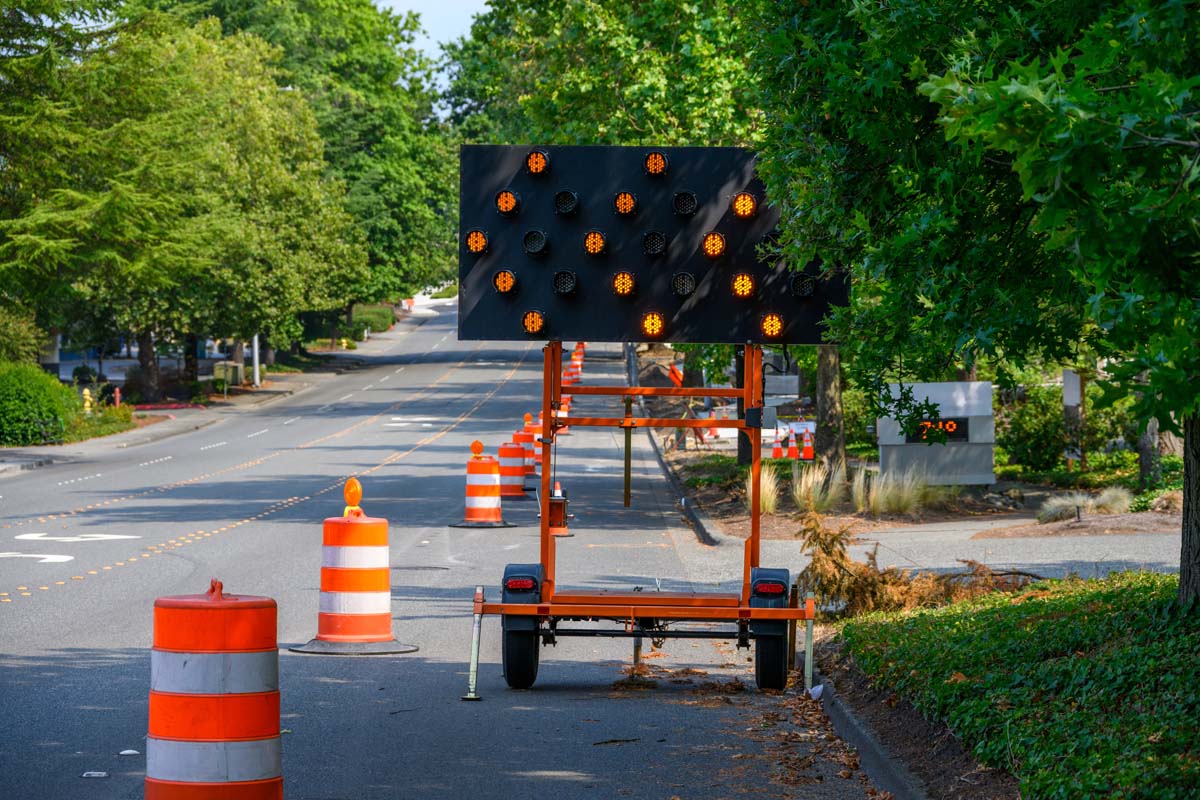
Most projects that affect a road need traffic control equipment for a defined period and then never again. Buying it means capital tied up in cones and sign stands that sit in a yard for eleven months of the year, plus the obligation to store, maintain and replace them.
Renting solves that. Here is what is available, what the compliance requirements actually are, and how to work out what your project needs.
What you can rent
A full rental inventory covers the equipment that appears on most work zones and event sites:
- Traffic cones in a range of heights for lane delineation and hazard marking
- Barricades and barriers, including water-filled, steel and plastic options for restricting access
- Temporary regulatory, warning and directional signs
- Windmaster sign stands built for high wind and quick setup
- Delineators and channelizing devices
Different projects lean on different parts of that list. A short utility repair in a residential street needs cones, a few signs and stands. A multi-week road construction project needs barriers that physically separate workers from live traffic.
The compliance piece that matters most
Traffic control in British Columbia is not a matter of preference. Equipment used on public roads has to meet provincial standards, and work zones fall under WorkSafeBC requirements for worker protection.
Signs must be the correct type, size and reflectivity for the road and the conditions. Devices have to be in serviceable condition, because a faded sign or a cone with no retroreflective collar does not meet the standard regardless of whether it is physically present. Every rental should meet BC Ministry of Transportation and WorkSafeBC standards, and that is a reasonable thing to confirm in writing before equipment arrives.
The practical risk of getting this wrong is not only a stop-work order. It is liability exposure if something happens in a zone that was not properly set up.
Equipment is only half of a compliant work zone
This is the point most often missed by people renting for the first time. Equipment establishes the physical layout. It does not replace the planning or the people.
Most work affecting a road requires a traffic management plan setting out how vehicles, cyclists and pedestrians will move through or around the site, and municipalities across the Lower Mainland have their own permitting processes. Depending on the work, you may also need certified Traffic Control Persons or Lane Closure Technicians on site. Our traffic control services cover plans, personnel and equipment together, which is usually simpler than sourcing each piece separately.
Working out what you need
Before requesting a quote, it helps to have answers to the following:
- The road classification and posted speed, since both affect the devices required
- Whether you are closing a lane, a shoulder, a sidewalk, or the full road
- The duration of the work and whether it runs overnight
- Whether pedestrians and cyclists need to be routed around the site
- The municipality involved, since permit requirements vary
- Whether the work is continuous or intermittent across several days
A supplier who knows the region can usually put a list together from those answers. If a provider quotes equipment without asking any of them, that is worth noting.
Rent or buy
Renting makes sense for most organizations most of the time. There is no capital outlay, no storage requirement, no maintenance obligation, and no replacement cycle to manage. Damaged or faded equipment is the supplier’s problem rather than yours, which matters because compliance depends on condition.
It also scales. A project that needs forty cones for one week and none thereafter is poorly served by ownership, and a contractor whose work volume varies month to month can match equipment to the actual schedule.
Purchasing starts to make sense only for organizations running continuous work with predictable equipment requirements, and even then most keep a rental relationship for peaks.
Delivery and timing
Same-day or scheduled delivery is available for most rentals, but building in lead time is sensible on anything larger than a short local job. Permits take time, and it is better to have the equipment on site the day before than to have a crew standing around waiting for it.
For emergency work, accidents and after-hours incidents, fast turnaround matters more than anything else, and it is worth knowing in advance which suppliers can actually deliver on short notice.
Request a quote
Stop N Go Traffic Control is a traffic management company based in Surrey, serving contractors, municipalities, event organizers and film crews across the Lower Mainland. We supply traffic control equipment and signage rentals alongside certified personnel and traffic management planning.
If you are choosing a provider, our guide on what to look for in a traffic control company is a useful starting point. Call 604.782.5200 for a quote.